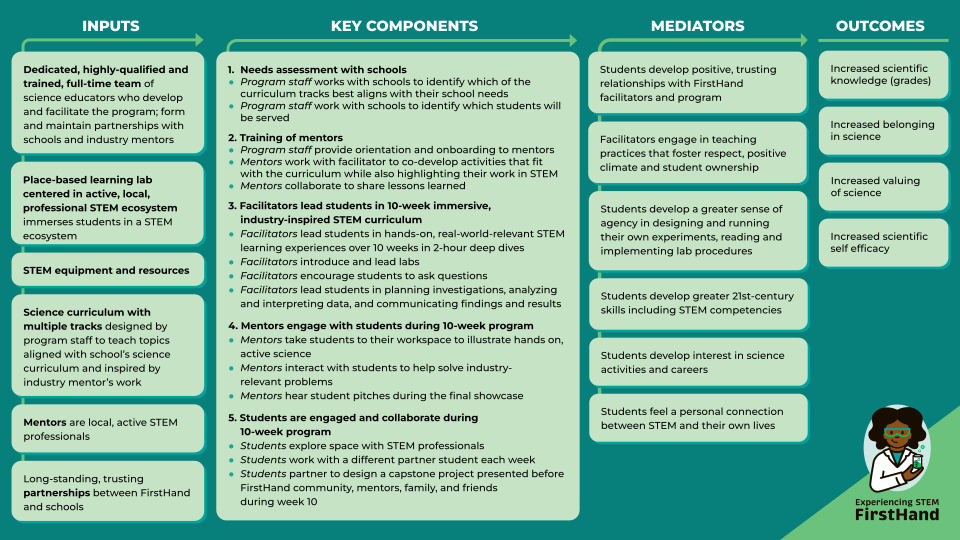
FirstHand’s logic model illustrates how the program is designed to impact students by showing how key resources and activities lead to meaningful outcomes.
The inputs (leftmost column) represent the foundational resources required to support and implement the program, such as dedicated full-time staff, a learning lab embedded within a STEM ecosystem, STEM equipment, multiple curricular tracks, local STEM mentors, and partnerships with area schools.
These inputs enable the key components of the program—the essential activities that drive its operation. These include assessing school needs, training mentors, and delivering hands-on STEM curriculum to students.
Mediator outcomes are the changes that emerge as a result of these key components. They help explain how participation in the program leads to its intended impacts. Finally, the intended outcomes (rightmost column) are the program’s ultimate goals: to positively influence students’ knowledge, sense of belonging, valuing of science, and self-efficacy.
An illustrative example of how the pieces of the logic model connect is as follows: hiring facilitators (input) who lead students in an immersive, investigative STEM curriculum (key component) is expected to foster students’ sense of agency in planning experiments (mediator), which in turn supports the desired outcome of increased self-efficacy—or students’ belief in their ability to successfully engage in science.

The logic model drives our conceptual understanding and analysis of the program’s effectiveness. To assess the program’s impact, we measure shifts in students’ academic achievement and beliefs about science through the following questions:
- Do students increase in their knowledge of science? Do their grades at school reflect progress in learning? Have their teachers observed an improvement in their STEM skills? (Source: student assessment data, teacher observations)
- Do students feel they belong in science? Do they feel understood, respected, and included in science? (Source: student surveys and focus groups)
- Do students value science? Is science interesting, useful, and important to them? (Source: student surveys and focus groups)
- Do students feel capable in science? Are they confident they can understand, learn, and remember ideas in science? (Source: student surveys and focus groups)
FirstHand’s Logic Model